All-on-4 Dental Implants and Who May Need Them in Huntington, IN
Quick Answer: All-on-4 dental implants replace a full arch of teeth using four implants to support a fixed set of replacement teeth. They may suit people who are missing most or all of their teeth, have teeth that can’t be saved, or struggle with loose dentures. Candidacy depends on bone, gum health, and overall health. Marvel Dental in Huntington, IN can examine your mouth and explain your options.
Loose dentures that keep slipping are often the point where people start asking about implants. For others, the trigger is a mouth full of failing teeth. All-on-4 is one answer to both situations, but it isn’t right for everyone.
What All-on-4 Dental Implants Are
Four well-placed implants can carry an entire arch because the teeth are joined into a single bridge. The implants act as artificial roots in the jawbone, and the connected set of teeth attaches on top. One arch means the upper or lower jaw, and some people replace both.
Compared with placing one implant per missing tooth, this approach uses fewer implants to restore a full row of teeth.
How All-on-4 Differs From Dentures
According to the UIC College of Dentistry, implant-supported dentures are a good way to replace missing teeth, or to replace conventional dentures that no longer fit well, because of potential bone loss and better comfort. The same page notes that implants replace some tooth roots, which helps preserve bone.
Key differences include:
- Stability: Implants hold the teeth in place, while traditional dentures rest on the gums.
- Bone support: Implants help stimulate the jawbone, which traditional dentures do not.
- Comfort: Many people find implant-supported teeth feel more secure when eating and speaking.
- Cost and time: Implants generally cost more up front and take longer than dentures.
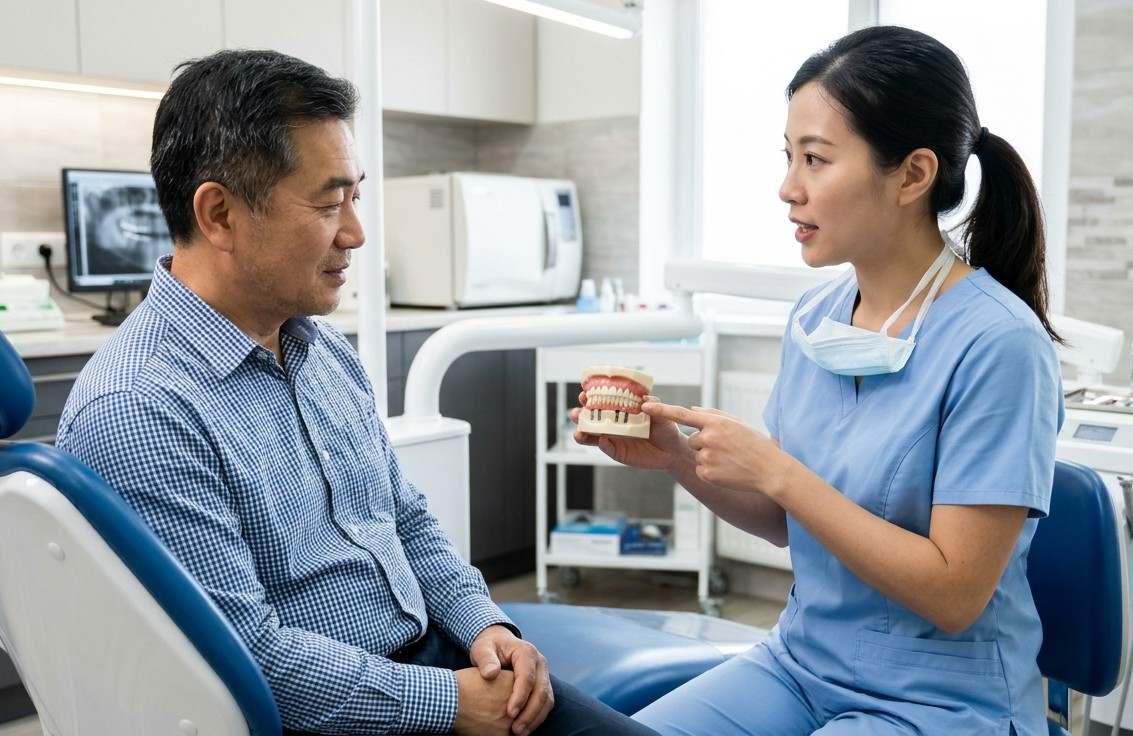
Who May Need All-on-4
A dentist may bring up full-arch implants when someone has:
- Most or all teeth missing in one or both arches
- Remaining teeth that can’t be saved because of decay, gum disease, or fractures
- Dentures that slip, cause sores, or no longer fit
- Trouble chewing that limits what they can eat
- A strong preference for teeth that don’t come out
Who Might Be Better Served by Another Option
All-on-4 isn’t always the answer. Someone missing only one or two teeth is often better served by a single implant or a bridge. People with certain health conditions, heavy tobacco use, or uncontrolled gum disease may need those issues addressed first, or may be steered toward a different plan.
What Makes Someone a Good Candidate
The strongest candidates have enough bone, healthy gums, and a clear picture of the commitment involved. Dentists look at:
- Bone: Enough healthy jawbone to hold the implants. If bone has shrunk, extra steps may be needed.
- Gums: Gum disease usually needs treatment first.
- General health: Conditions that affect healing, such as poorly controlled diabetes, matter.
- Habits: Smoking can slow healing, and daily cleaning is essential afterward.
- Expectations: Knowing the timeline and costs helps prevent surprises.
What the Process Usually Looks Like
Every plan differs, but most follow this path:
- A consultation and exam, with X-rays or scans of your bone.
- A treatment plan that covers timing, materials, and costs.
- Preparation, which may include a tooth extraction and healing time.
- Implant placement in the jawbone.
- Healing, while the implants bond with the bone.
- The final set of teeth, shaped to fit your bite and your smile.
Your dentist should explain when you’ll receive teeth and what to wear or eat in the meantime.
Healing and Adjusting
Some swelling and soreness are normal after surgery. A softer diet helps early on, and follow-up visits let the team check healing and fine-tune your bite. Give yourself time, since it takes a while to get used to a new set of teeth.
Caring for a Full-Arch Restoration
Implants don’t get cavities, but the gums around them still need care:
- Brush twice a day and clean around and under the teeth
- Use the cleaning tools your dentist recommends
- Keep regular checkups and professional cleanings
- Ask about a night guard if you grind your teeth
- Skip tobacco, which raises the risk of problems
Things to Weigh Before Deciding
If you’ve been searching “all-on-4 dental implants near me”, compare more than the first result. Useful questions include:
- Why do you recommend this over other options for my mouth?
- What does the whole process involve, from first visit to final teeth?
- How long is the healing period?
- What are the risks, and how are they managed?
- What will it cost, and what might insurance cover?
Full-arch treatment is a significant investment of time and money, so a clear conversation matters.
How Marvel Dental Approaches Full-Arch Implants
At Marvel Dental, the starting point is an honest look at your mouth, not a preset plan. As a dentist in Huntington, IN offering All-on-4 restorations at our Huntington office, the team explains whether the approach suits you, what the steps involve, and what alternatives exist.
Cost is part of that discussion. Our team can review your insurance and talk through financing options so you know what to expect.
Talk Through Your Options
You don’t have to decide before you call. Schedule a consultation or call us at 260-200-4100, and we’ll examine your mouth and walk you through the possibilities. We welcome patients from Huntington, Roanoke, Warren, and Markle.
Frequently Asked Questions
It replaces a full arch, meaning the upper or lower row of teeth, using four implants as support. Your dentist can tell you how it would work in your mouth.
No. Traditional dentures rest on the gums, while an All-on-4 restoration is anchored by implants in the jawbone.
Sometimes. Bone loss may call for extra steps or a different plan, so an exam and imaging are needed.
The area is numbed during treatment, and soreness afterward is common. Your dentist will explain how to manage it.
Coverage varies by plan and treatment. Our team can help review your benefits before you start.