What Are the Benefits of Dental Implants for Missing Teeth in Fort Wayne, IN?
Quick Answer: Dental implants replace the root as well as the visible tooth, so they stay firmly in place, feel natural when you chew, help protect your jawbone, and don’t depend on neighboring teeth for support. They can replace one tooth, several teeth, or anchor a full set of replacement teeth. Marvel Dental in Fort Wayne, IN can examine your mouth and tell you if implants are a good fit.
Losing a tooth changes more than your smile. Chewing gets harder, nearby teeth can drift, and the bone under the gap slowly shrinks. Implants are popular because they address the root of the problem instead of only filling the space.
How Dental Implants Work
An implant is a small post, usually titanium, placed in the jawbone where the tooth root used to be. Over time it bonds with the bone. A connector and a custom implant crown are then added on top, so the finished tooth looks and works like a natural one.
Key Benefits of Dental Implants
Here is what patients tend to value most:
- A natural look and feel. Implants are shaped and matched to blend in with your smile.
- Stable chewing and speaking. According to Massachusetts General Hospital, implants integrate into the bone, so they don’t slide or shift while you eat or talk.
- Jawbone support. A missing tooth leaves the bone without the stimulation it gets from a root. An implant helps replace that.
- Healthy neighbors left alone. There’s no need to reshape nearby teeth to hold a replacement in place.
- Long-term durability. With good care, many implants last for decades.
- Simple daily care. You brush and floss as you normally would.
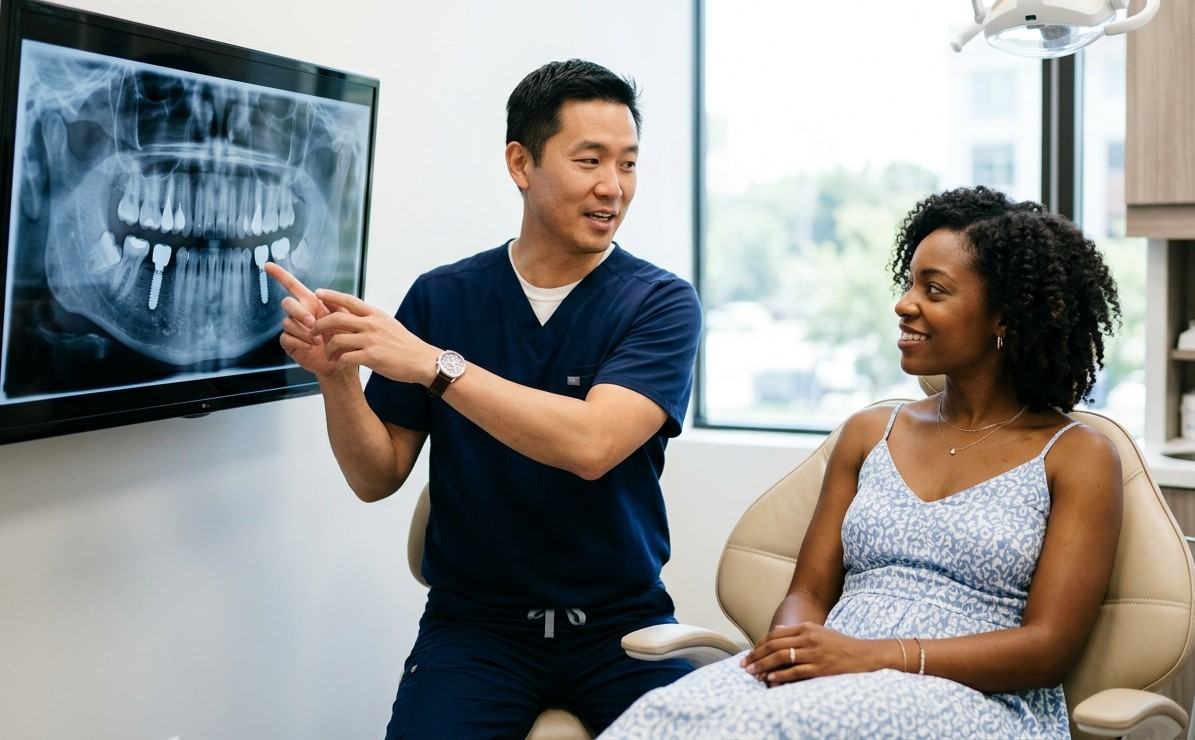
Protecting Your Jawbone and Neighboring Teeth
These last two points deserve a closer look. Bone that goes unused tends to shrink, which can change how your face looks and make future treatment harder. Teeth beside a gap also tend to lean into the space, which can affect your bite.
Replacing the tooth sooner, and with a root, helps limit both problems. That is one reason many dentists bring up implants early when a tooth is lost.
Implants for One Tooth, Several Teeth, or a Full Smile
Implants adapt to different situations:
- One missing tooth: a single implant topped with a crown.
- Several missing teeth: implants can support a bridge, so you don’t need one implant per tooth.
- Most or all teeth missing: options include All-on-4 restorations, or implants that help secure dentures.
Your dentist will recommend the approach that suits the number of teeth, the bone available, and your goals.
How Implants Compare With Bridges and Dentures
Each option has a place:
- Bridges are often quicker, but they rely on the teeth beside the gap, which are reshaped to hold the bridge.
- Dentures can replace many teeth at once, though removable ones may shift, and the jawbone still changes over time.
- Implants take longer and involve a minor surgical step, but they replace the root and stand on their own.
There’s no single right answer. The best choice depends on your health, your budget, and how you want your teeth to function.
Who Makes a Good Candidate
MGH notes that patients with good oral health, healthy gums, and enough bone are usually good candidates. Active gum disease, heavy smoking, and certain health conditions can affect healing. Some people need extra preparation first, and the dentist will explain what’s involved.
If a damaged tooth still has to come out, a tooth extraction can be planned with the replacement in mind.
What the Process Usually Looks Like
Every case is different, but most follow this path:
- Exam and X-rays to check your gums, bone, and nearby teeth.
- A treatment plan covering the type of implant and the timeline.
- Placement of the implant post in the jawbone.
- Healing time while the post bonds with the bone.
- The final crown or restoration, matched to your smile.
Caring for Your Implants
Implants can’t get cavities, but the gums around them can still be affected by gum disease. Brush twice a day, clean between your teeth, and keep your regular checkups. Good habits are what protect an implant for the long run.
Things to Weigh Before Choosing Implants
If you’ve been searching “dental implants near me”, compare more than the first option you find. Good questions to ask:
- What does the full process involve, from first visit to final tooth?
- How long will healing take?
- What will it cost, and what might insurance cover?
- What are the alternatives for my situation?
Implants generally cost more up front and take longer than other options. Many patients see them as a long-term investment, and a clear conversation helps you decide.
How Marvel Dental Approaches Dental Implants
At Marvel Dental, the starting point is an honest look at your mouth, not a preset answer. As a dentist in Fort Wayne, IN that offers dental implants, the team explains each option, what to expect, and how the steps fit together before you commit.
Cost is part of that conversation. Our team can review your insurance and discuss financing options so the plan fits your budget.
Find Out If Implants Are Right for You
You don’t need to be sure before you call. Schedule a consultation or call us at 260-666-5200 (Coldwater Road) or 260-666-5100 (Jefferson Boulevard), and we’ll look at your options together. Patients visit us from Fort Wayne and New Haven.
Frequently Asked Questions
Many patients find them worth it because they replace the root, protect bone, and can last for decades with care. The right choice depends on your health and goals.
With good oral hygiene and regular checkups, many implants last for many years. Your dentist can tell you what to expect in your case.
The area is numbed during treatment. Mild soreness afterward is common, and your dentist will explain how to manage it.
One implant replaces one root, but a few implants can support several teeth, such as a bridge or a full set.
Coverage varies by plan. Our team can review your benefits so you know what to expect before you start.