How Does a Root Canal Save a Damaged Tooth in Fort Wayne, IN?
Quick Answer: A root canal removes the infected or damaged pulp from inside a tooth, cleans the inside, and seals it, so you can keep your natural tooth instead of losing it. Treatment is done under numbing and often takes one or two visits. Marvel Dental in Fort Wayne, IN can examine the tooth and tell you whether a root canal is the right fix.
The phrase “root canal” makes many people nervous, but the treatment exists to protect your tooth, not to take it away. When the inside of a tooth is damaged or infected, a root canal is often the way to stop the problem and keep the tooth working.
What a Root Canal Treats
At the center of every tooth is the pulp, a soft tissue with nerves and blood vessels. According to the American Dental Association’s MouthHealthy site, a root canal can be recommended for a severely damaged or decaying tooth or a serious infection called an abscess. Common causes include deep decay, a cracked or fractured tooth, and repeated dental work on the same tooth.
How a Root Canal Saves the Tooth
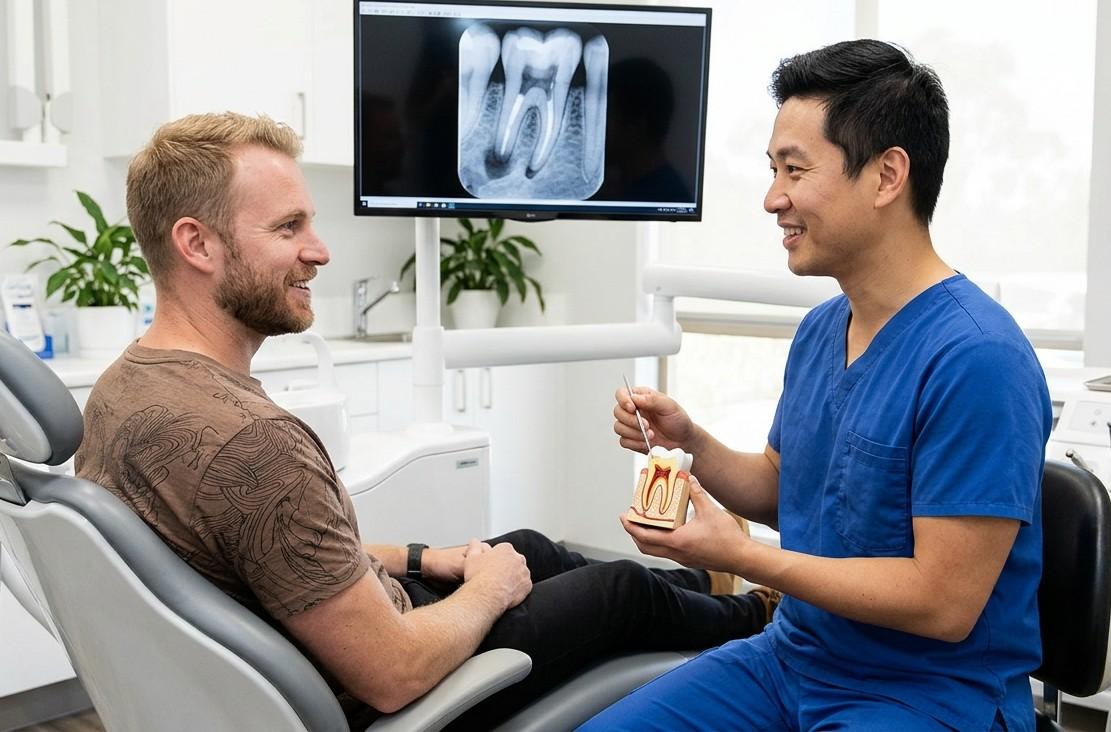
The goal is to remove what is causing the trouble while leaving the tooth’s outer structure and root in place. The dentist takes out the damaged pulp, cleans the inside of the tooth, and seals it so bacteria can’t return.
This matters for several reasons:
- The infection is removed instead of spreading.
- The tooth stays in your mouth and keeps working.
- The root stays in the jawbone, which helps support the bone.
- Neighboring teeth keep their natural spacing.
Without treatment, the ADA explains, the tissue around the root can become infected, causing pain, swelling, and possibly an abscess.
Signs You May Need a Root Canal
Only an exam can confirm it, but these signs deserve attention:
- Severe toothache, especially when chewing or biting
- Sensitivity to hot or cold that lingers after the drink is gone
- Swelling in the gums or face
- A small bump on the gum near the tooth
- A tooth that looks darker than its neighbors
Sometimes a tooth has an infection with few symptoms, so regular exams matter too.
What Happens During Treatment
Every case varies, but a root canal generally follows these steps:
- Numbing so the area is comfortable.
- An opening made in the top of the tooth.
- Removal of the pulp from the tooth and its canals.
- Cleaning of the inside of the tooth.
- Filling and sealing to keep bacteria out.
- A follow-up visit to restore the tooth.
The ADA notes that a root canal usually takes one or two office visits.
Why a Crown Often Follows
A tooth that needs a root canal is often weakened by decay or damage, and it can become more fragile afterward. A crown covers and protects it so it can handle everyday chewing. Your dentist will tell you if the tooth needs one or can be restored with a filling.
Recovery and Aftercare
Mild soreness or sensitivity after treatment is common and usually fades within a few days. Most people find a few simple habits help:
- Stick with softer foods while the area settles
- Avoid biting hard on the treated tooth until it has been restored
- Keep brushing and flossing as usual
- Call your dentist if pain or swelling gets worse instead of better
Root Canal vs. Tooth Extraction
Pulling a tooth can feel like the simpler answer, but it leaves a gap that usually needs a replacement. A tooth extraction may be the right call when a tooth can’t be restored, and in that case an implant or bridge can fill the space.
When a tooth can be saved, keeping it is often the better long-term choice. Your dentist can explain which path suits your tooth.
When to Get Help Right Away
Don’t wait if you have a severe toothache, swelling, or fever. If you’ve been searching “root canal near me” because a tooth is causing pain, call soon, since infections tend to get worse over time. For sudden pain, emergency dentistry can help you get seen.
How Marvel Dental Approaches Root Canals
At Marvel Dental, the first step is understanding what is happening inside the tooth. As a dentist in Fort Wayne, IN offering root canal treatment at our Jefferson Boulevard office, the team explains what the exam and X-rays show, what your options are, and what recovery looks like before treatment begins.
Many patients worry about discomfort, so painless treatment approaches help keep visits calm. Our team can also review your insurance and financing options so the cost is clear in advance.
Get Relief and Protect Your Tooth
If a tooth hurts or something feels wrong, an exam is the best way to find out. Schedule a consultation or call us at 260-666-5100, and we’ll look at the tooth and explain what it needs. We welcome patients from across Fort Wayne.
Frequently Asked Questions
The tooth is numbed first, so you shouldn’t feel the treatment itself. Some soreness afterward is common and usually fades within a few days.
The ADA says treatment usually takes one or two visits. Your dentist can give you a clearer estimate once they have examined the tooth.
Once the pulp is infected or badly damaged, the tooth generally can’t heal on its own. A dentist can tell you what the tooth needs.
Often, yes, especially for back teeth that handle heavy chewing. Your dentist will recommend the right restoration for your tooth.
An infection can spread, causing more pain and swelling and putting the tooth at risk. Getting treated sooner usually means a simpler path.