Do Any Dentists in Fort Wayne Offer Same-Day or Emergency Appointments?
Yes. A number of Fort Wayne dental offices, including Marvel Dental on Coldwater Road, hold open time each day for urgent problems, so patients with a severe toothache, broken or knocked-out tooth, lost crown, or facial swelling can usually be seen within hours. Call as early in the day as you can, since same-day slots fill quickly.
Dental problems rarely wait for a convenient moment. They tend to show up on a Friday afternoon, during a work trip, or the night before something important. And when you're in pain at 7 a.m., the hardest part isn't the tooth. It's not knowing whether you should call a dentist, wait it out, or head to the emergency room. Here's how urgent dental care actually works in Fort Wayne, so you can make that call quickly and confidently.
What actually counts as a dental emergency
Not every dental problem needs same-day attention, and knowing the difference saves you a lot of worry.
Call right away. Same-day care matters for:
- A tooth that's been knocked completely out
- Severe, throbbing pain that keeps you awake or doesn't respond to over-the-counter pain relievers
- Swelling in the gums, cheek, or jaw, especially with fever or a bad taste in your mouth
- A cracked or broken tooth that's painful or has a sharp edge cutting your tongue
- Bleeding that won't stop after a tooth is pulled or the gums are injured
- A loose or displaced adult tooth after a fall or sports injury
Important, but usually fine to schedule in the next day or two:
- A crown or filling that came off but isn't painful
- A chipped tooth with no pain and no sharp edge
- Mild sensitivity to hot or cold
- Food consistently packing between two teeth
- A broken denture or a poking orthodontic wire you can cover with wax
The rule of thumb most dentists use: if there's uncontrolled pain, active bleeding, swelling, or trauma, it's a true dental emergency. If it's mainly annoying or cosmetic, it can wait a few days without getting worse.
How same-day appointments actually work
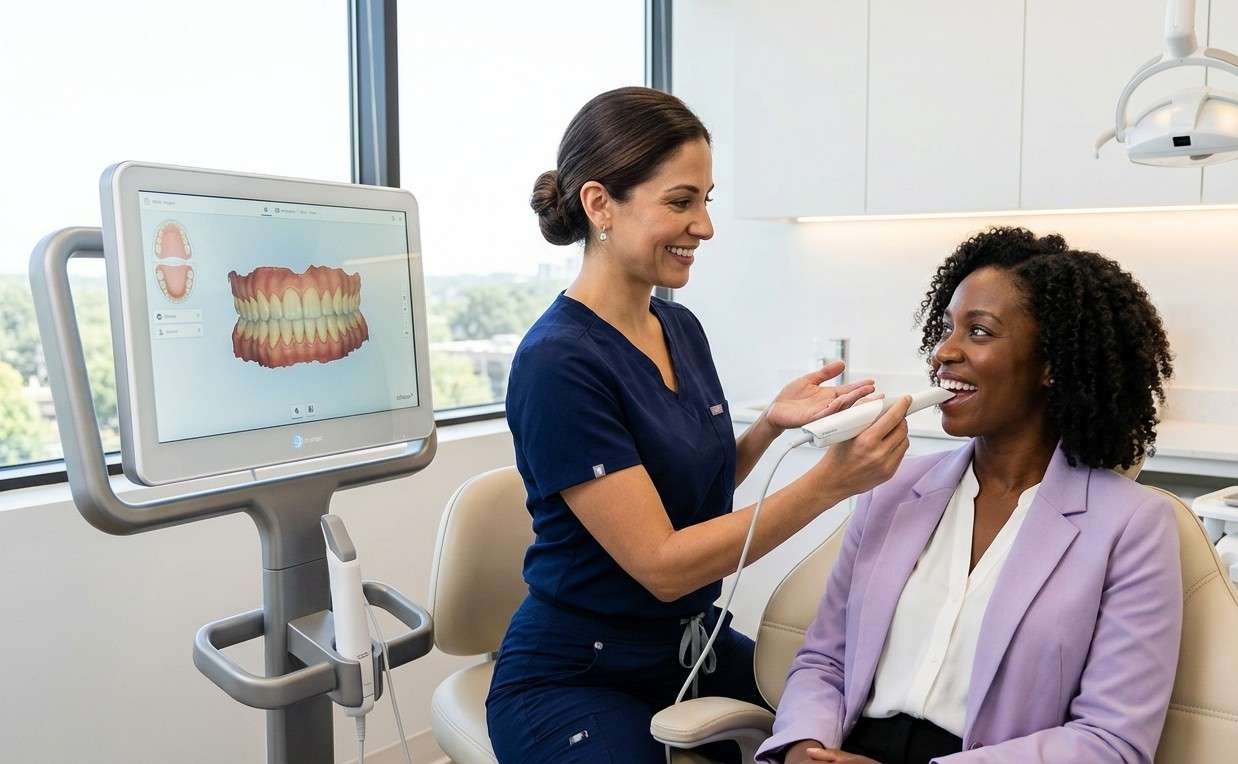
Same-day care isn't a matter of squeezing you in wherever there's a gap. Offices that handle urgent visits well plan for them. A couple of shorter openings are deliberately left unfilled each day, because someone always needs them.
When you call, expect a few quick questions: where the pain is, how long it's been going on, whether there's swelling, and whether anything was knocked loose. That's triage. It tells the team how urgently you need to be seen and how much chair time to reserve.
It also helps to know what a first emergency visit is usually for. The goal is to get you out of pain and stabilize the tooth: an exam, an X-ray of the area, and then treatment aimed at the source. Sometimes that finishes the job in one appointment, whether it's a filling, a re-cemented crown, or an extraction. Other times, the tooth needs a root canal and a permanent crown, and the first visit handles the painful part while the final restoration comes later. Either way, you should leave comfortable and with a clear plan.
A practical Fort Wayne note: mornings are your best shot. By mid-afternoon, most of the day's flexible time has already been claimed. If you wake up in pain, call before you talk yourself out of it.
What to do in the first few minutes
What you do before you reach the office genuinely affects the outcome, particularly with injuries.
- Knocked-out adult tooth: Pick it up by the crown (the chewing part), never the root. If it's dirty, rinse it briefly with milk or saline, not tap water, and don't scrub it. If you can, place it back in the socket and bite gently on a clean cloth. If you can't, keep it in a cup of milk and get to a dentist within the hour. Time is the single biggest factor in whether that tooth survives. (A knocked-out baby tooth should not be put back in. Bring your child in, but leave the tooth out.)
- Broken tooth: Rinse with warm water, use a cold compress on the outside of the cheek, and save any pieces. A crown is often what rebuilds a tooth like this once the pain is handled.
- Severe toothache: Rinse with warm salt water and use an over-the-counter pain reliever as directed. Skip the old advice about placing an aspirin against the gum. It burns the tissue and doesn't help the tooth.
- Lost crown or filling: Keep the crown, avoid chewing on that side, and don't use household glue to reattach it.
- Swelling: Cold compress, and call the same day. Swelling means infection, and infection spreads.
When the emergency room is the right choice instead
Hospital emergency departments in Fort Wayne generally can't perform dental treatment. They can manage pain and prescribe antibiotics, but the tooth itself still needs a dentist, which is why an ER visit for a toothache often means paying for two visits instead of one.
Go straight to the ER, though, if you have swelling that's closing your eye or spreading toward your throat, difficulty breathing or swallowing, a suspected broken jaw, bleeding that won't stop with pressure, or a facial injury involving a blow to the head. Those are medical emergencies first and dental problems second.
If you're in pain right now
Don't wait to see whether it settles down overnight. Dental pain that's bad enough to make you search for answers is almost always worth a phone call. Marvel Dental has two Fort Wayne offices, including 4614 Coldwater Rd, Ste F in the 46825 area, and same-day emergency visits are available to patients across Fort Wayne and nearby communities. Call 260-666-5200, describe what's happening, and we'll tell you honestly whether you need to come in today.
Frequently Asked Questions
Yes. You don't need to be an established patient to be seen for an emergency at Marvel Dental. New patients are welcome for urgent visits, and you can book online or call and we'll gather your health history when you arrive.
Sometimes, but not always. Simple issues like a re-cemented crown, a small filling, or an extraction are often finished in one appointment. Deeper problems like an infected nerve or a badly fractured tooth usually take an initial visit to relieve pain and a follow-up to complete the permanent repair. If anxiety is part of what's kept you away, ask about comfort-focused treatment options when you call.
It depends entirely on the treatment. A limited exam with an X-ray is a relatively small cost; the bigger variable is what the tooth actually needs. Most dental insurance plans cover emergency exams, and our team can review your benefits and payment options before you commit to treatment.
Call the office anyway. The voicemail or answering system will tell you how to reach the dentist. In the meantime, manage pain with over-the-counter medication and a cold compress, and go to the ER for the serious warning signs listed above.
Yes. Antibiotics can quiet an infection temporarily, but they don't remove the source of it. Without treating the tooth itself, usually with a root canal or extraction, the infection typically returns, often worse.
Yes. Our children's dentistry team sees plenty of playground and sports injuries, and they're often time-sensitive. Call right away and describe what happened, since the response for a baby tooth differs from an adult tooth. If your child plays contact sports, a custom mouthguard through sports dentistry prevents a lot of these visits in the first place.